
Pro Training Tip: Why Dogs Don’t Generalize Behavior

One of the most misunderstood aspects of dog training is this: dogs do not automatically generalize behaviors. When a dog learns something, she connects that behavior to the specific context in which it was taught — the location, your body position, the environment, even what you are wearing. If you teach a lie down [...]


2026-03-25T17:03:29+00:00March 24th, 2026|Animal Behavior, Dog Behavior, Dog Training|

Predatory Behavior vs. Deliberate Cruelty: The Cat Is Innocent

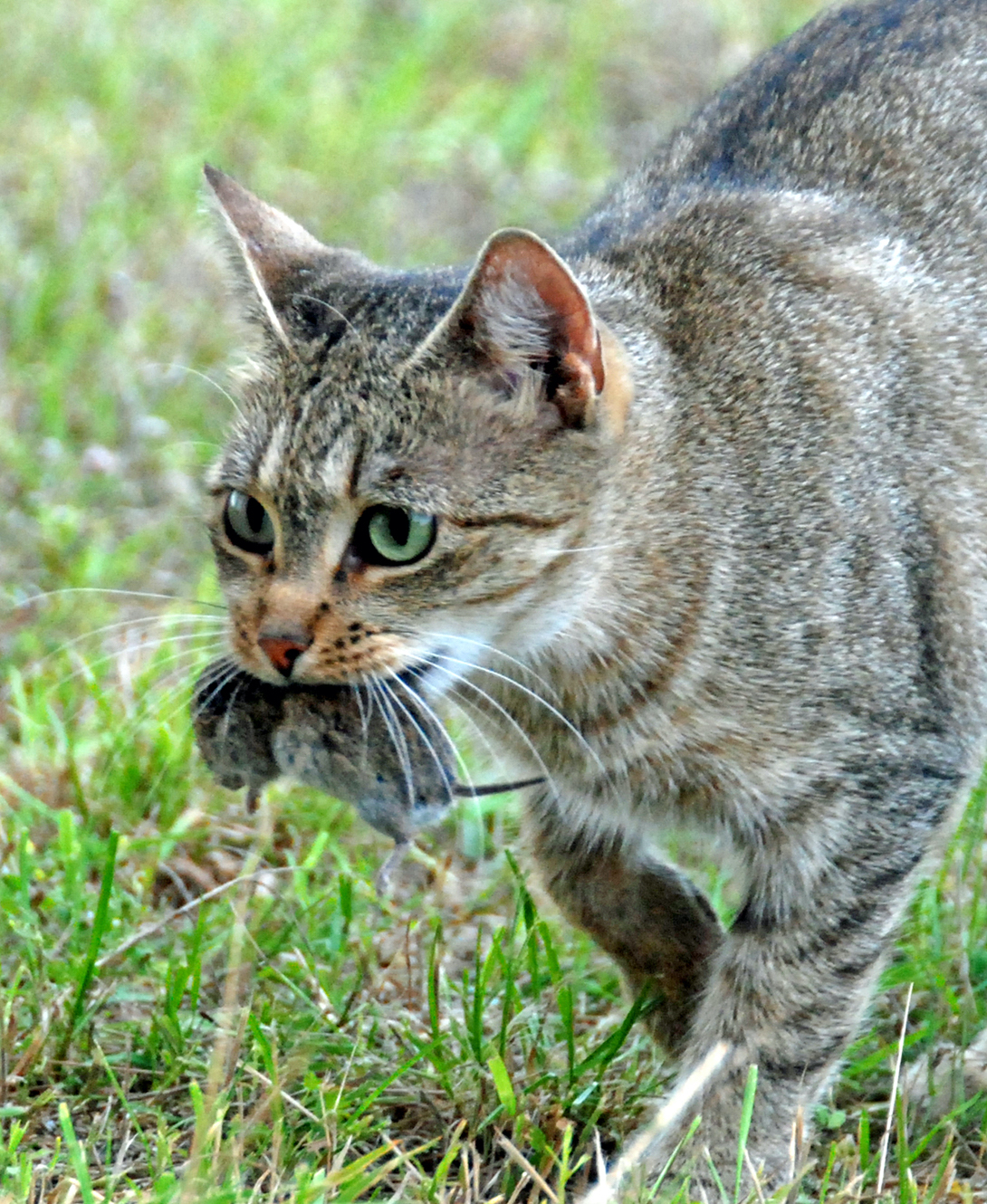
Predatory Aggression Predatory aggression is not the same as being cruel or deliberately hurting another. Although sport hunters or recreational hunters and those who engage in animal cruelty often cite cats as role models, it's a false equivalence. Both cats and humans have the same brain structures, but the regions that are active and [...]

2026-03-03T21:00:47+00:00March 3rd, 2026|Animal Behavior, Cat Behavior, Cat Training|

Rescuing Dogs and Cats in Syria — Reem Lajin & Animals to Safety

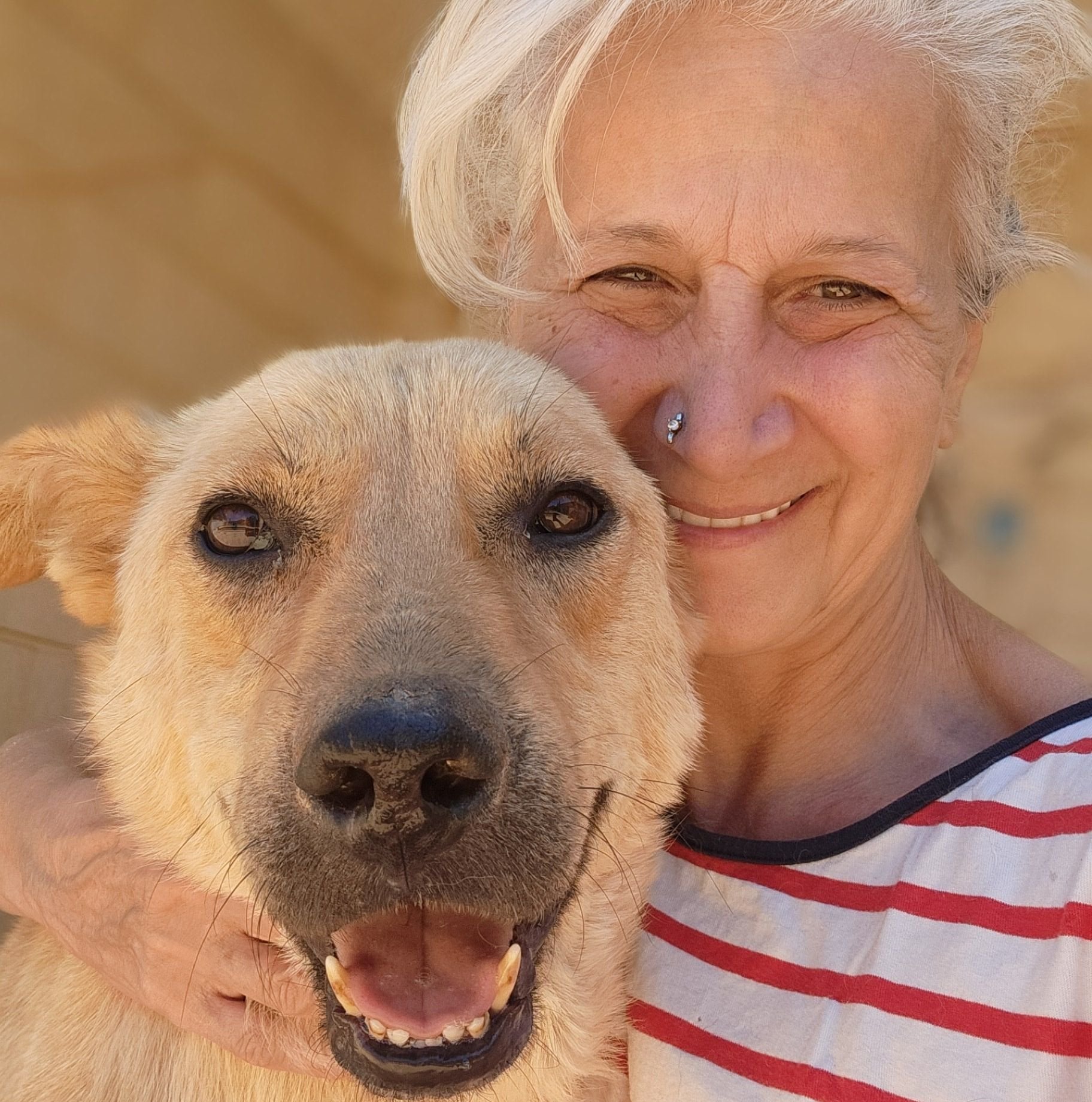
The Rescuer: Reem Lajin While most people fled Syria during the war, Reem Lajin did the opposite — she moved there. An American who spent over 25 years in Virginia, Reem returned to her native Syria because that's where she felt animals needed her most. She founded her non-profit and sanctuary, Animals to Safety, [...]

2026-03-03T21:58:50+00:00February 13th, 2026|Animal Advocacy, Animal Rescue|

Free-Feeding Your Cat Is Better for Behavior

"My cat is always hungry" is a frequent complaint. For the past 15 years, there's been an ongoing trend for cats to be thin and portion-fed. Veterinary hospital charts show body condition images where "normal" cats keep getting thinner. Some even show visible ribs as "healthy" weight. This has led to an increase in [...]

2026-02-25T17:57:02+00:00July 3rd, 2024|Cat Behavior, Cat Training|

Shock Collars, E-Collars, and Remote Training Systems

When I started behavioral work over 20 years ago, I used humane methodology. My first client was a Dachshund with food aggression and guarding. At the time, I was stunned to learn that the majority of trainers were using punitive techniques such as punching dogs, yanking them with prong collars, "helicoptering" them — hanging [...]

2026-02-26T15:06:10+00:00March 16th, 2024|Animal Behavior, Dog Behavior, Dog Training|

Cat Behavior & Handling Tutorials

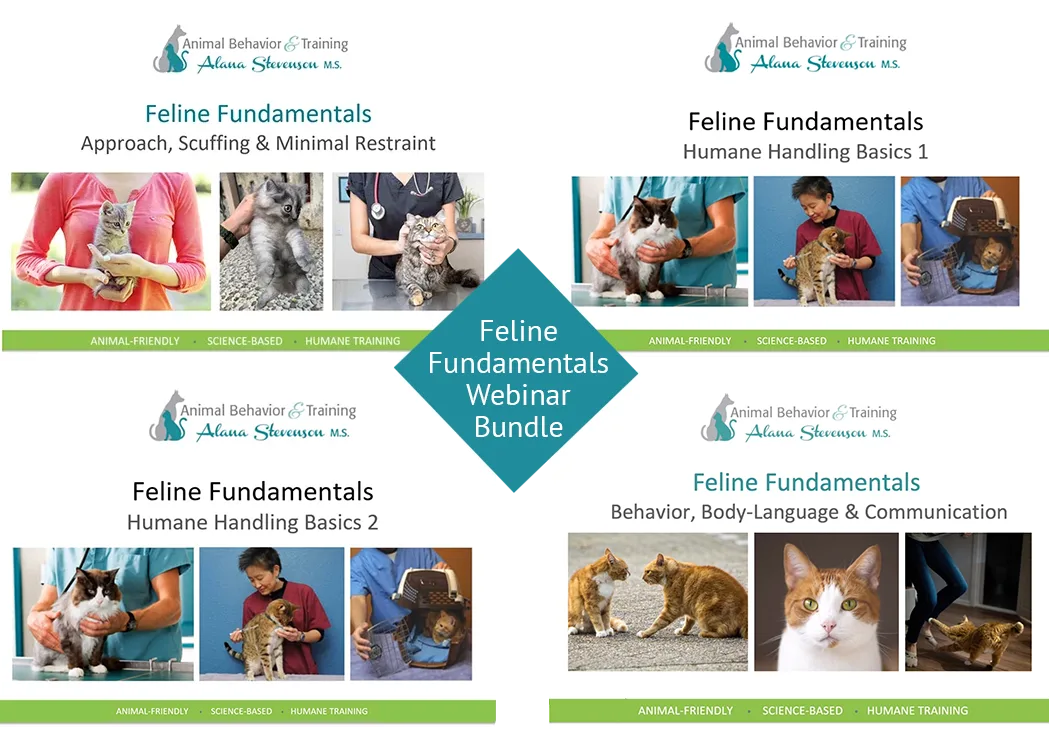
Learn more about Feline Behavior Self-paced tutorials by Alana Stevenson Approach, Scruffing & Minimal Restraint An introductory webinar on humane feline handling techniques. Alana explains how to approach cats to keep them calm, why scruffing should be avoided, and the basic principles of minimal restraint. (8 min.) Humane Handling Basics 1 & 2 Two [...]

2026-03-02T15:44:24+00:00September 26th, 2023|Announcement, Cat Behavior, Cat Training|

The Good Cat Parent’s Guide to Feline Behavior Modification

A practical guide to cat behavior, feline handling, and solving cat behavior problems. The Good Cat Parent's Guide to Feline Behavior Modification by Alana Stevenson (Routledge Press, 2024) is now available. Topics include: Kitten development and play strategies Feline body language and environmental enrichment Handling techniques and emotional bonding Litter box problems Inter-cat aggression [...]

2026-03-01T19:56:48+00:00September 5th, 2023|Animal Behavior, Announcement, Cat Behavior, Cat Training|

Adopt a Dog or Cat from the Animal Shelter

A second chance saves a life—and gives you a companion who needs you. Tens of thousands of dogs and cats—including puppies and kittens—are killed daily in animal shelters. One large city shelter can euthanize up to 300 cats and kittens in one day. Many shelters across the U.S. still use gas chambers, heart sticks, [...]

2026-02-27T18:12:11+00:00April 3rd, 2022|Animal Advocacy, Animal Rescue, Pets, Sheltering|

Hungry Puppies Need to be Well-Fed

Puppies go through major developmental changes quickly. They need calories and good nutrition for physical and mental health. All puppies should be able to eat when they are hungry and stop when they are full. Exercise, how much mental and physical stimulation the dog has, and stress all contribute to how well a dog [...]

Ear-Cropping and Tail-Docking in Dogs

Ear-cropping and tail-docking are two commonly accepted practices often considered "breed standard." However, the process of ear-cropping and tail-docking is not humane, nor is it necessary for health. For tail-docking, tails are chopped off, usually with surgical scissors, when the puppies are newborn. This is because a newborn puppy's cartilage is still soft. Removing [...]

Go to Top